Roof Deck & Ventilation Specialists

Attic Mold Removal in Raleigh, NC

Roof leaks, poor ventilation, and bathroom fans vented straight into the attic are the top three causes of attic mold across the Triangle.

Roof Deck Treatment Ventilation Correction Bath Fan Re-Routing
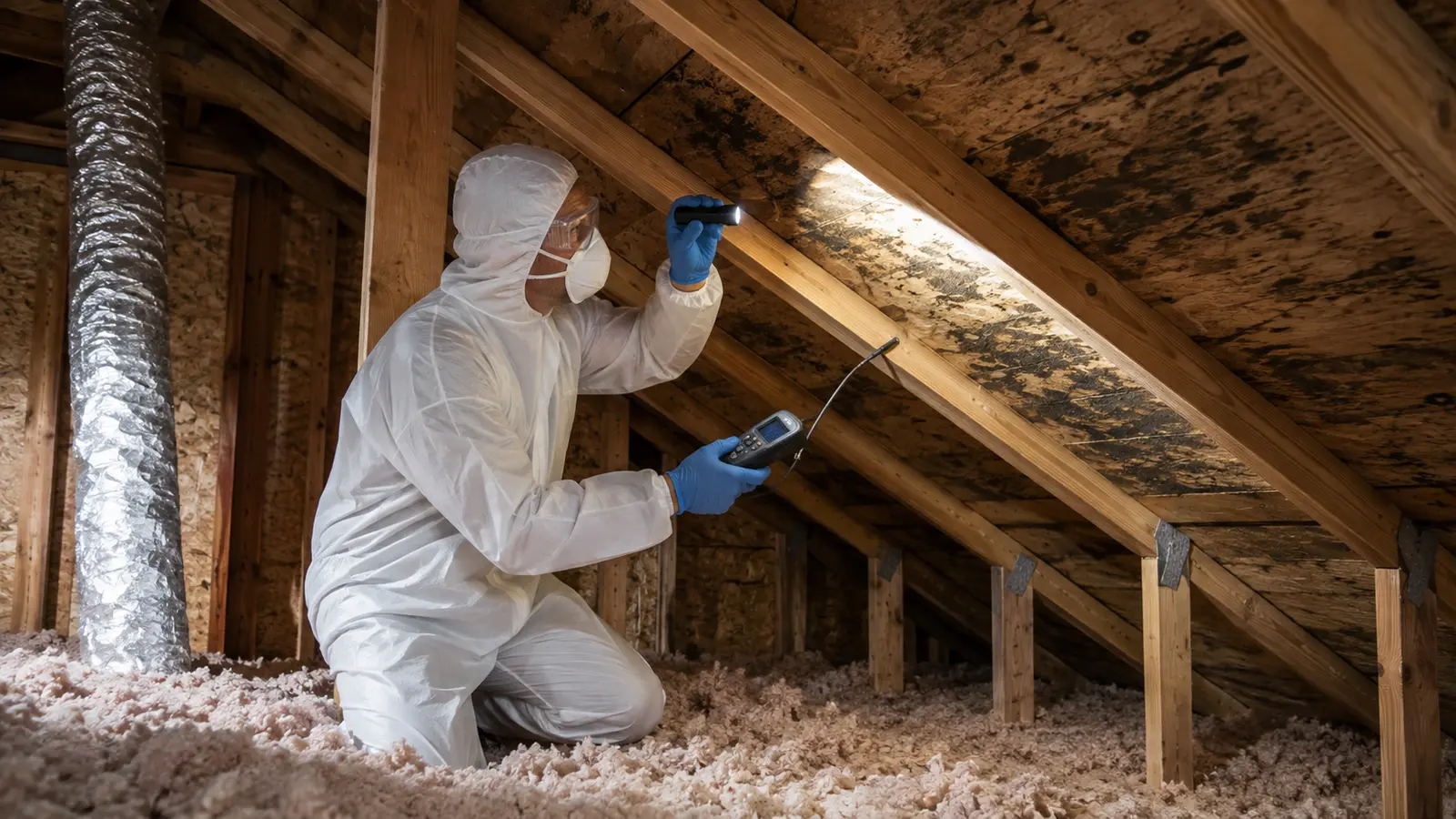
Protected technician inspecting moisture and mold staining on wooden roof sheathing in an attic

Attic mold in Raleigh almost always comes down to one of three causes: an undetected roof leak, inadequate soffit/ridge ventilation trapping warm moist air against the roof deck, or bathroom exhaust fans that were vented into the attic instead of outside (more common in older construction than most homeowners realize). Summer humidity accelerates all three — a poorly ventilated attic can hit dew point against the roof sheathing on a humid July night even without any leak at all.

Attic mold is often first noticed from the ground — dark staining visible on roof decking through the soffit vents, or a musty smell coming from an attic access hatch — but the real diagnosis happens by getting eyes directly on the roof deck and checking every potential moisture source, not just treating the visible staining.
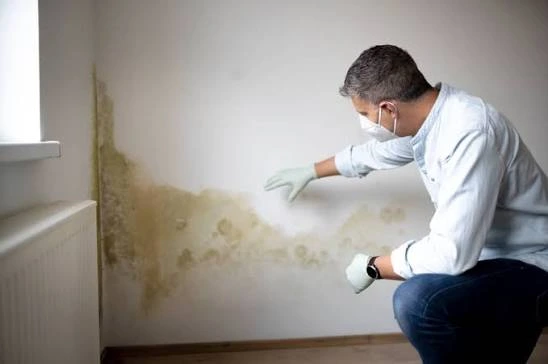
Technician inspecting an interior wall for mold growth
On-site assessment ahead of roof deck and ventilation work.

Signs You Need Attic Mold Removal

  • Dark staining on the underside of the roof deck visible from the attic access or through soffit vents.
  • Musty odor near the attic hatch or noticeably in upstairs rooms directly below the attic.
  • Visible daylight or water staining around roof penetrations, vents, or chimney flashing — signs of an active leak.
  • A bathroom fan that seems to vent nowhere worth checking whether it terminates outside the roof or just dumps into the attic space.
  • Condensation or frost on nail tips visible in the attic during cold months — a classic sign of ventilation imbalance.

Our Attic Mold Removal Process

1

Roof Deck & Ventilation Inspection

Full attic walkthrough checking roof deck condition, insulation, soffit/ridge vent function, and every bathroom/kitchen exhaust termination point.

2

Source Correction

Bath fans re-routed to proper roof or soffit termination, ventilation balance corrected (adding soffit or ridge venting as needed), and any active roof leak flagged for repair.

3

Mold Treatment

Affected roof deck and framing is HEPA-vacuumed and treated with an antimicrobial; heavily compromised decking is flagged for a roofer if replacement is needed.

4

Insulation Assessment

Wet or mold-affected insulation is removed and replaced after treatment — leaving contaminated insulation in place is one of the most common reasons attic mold returns.

Attic Mold Removal Cost in Raleigh

Every job is different, but here's what Raleigh-area homeowners typically pay. For a full cost breakdown across every service and an interactive calculator, see our complete mold remediation cost guide.

Typical Raleigh-area price range
ScenarioTypical RangeNotes
Attic mold treatment, small area$600 – $1,500Localized staining near one vent or penetration.
Attic mold treatment, extensive$1,500 – $4,000Widespread roof deck staining or multiple sections.
Ventilation correction (soffit/ridge venting)$800 – $2,500Often paired with remediation to fix the underlying cause.
Bath fan re-routing (per fan)$300 – $700Common fix when a fan vents into the attic instead of outside.
Every quote is written, itemized, and fixed before we start. No hourly surprises, no change orders unless we find something during demolition that genuinely wasn't visible during inspection — and if that happens, we stop and call you before continuing.
FAQ

Attic Mold Removal — Frequently Asked Questions

Attic spaces are typically unoccupied and somewhat isolated from living space air, so the direct exposure risk is usually lower than mold inside a bedroom or bathroom — but attic mold indicates a ventilation or moisture problem that can affect roof deck integrity over time, and spores can migrate into living space through the attic hatch or shared air pathways, especially with HVAC equipment located in the attic.
No — mold-resistant paint or sealant is sometimes used as a final cosmetic/sealing step after remediation, but painting over active mold without removing it and fixing the moisture source just traps the problem and gives a false sense that it's handled.
Often yes, if the roof leak itself was sudden and covered (storm damage, for example) and you addressed it promptly. Mold from a long-term, unaddressed ventilation issue is typically not covered as it's considered a maintenance issue rather than a sudden covered event — see our insurance guide for details.
The clearest sign is condensation or frost on roofing nails visible from inside the attic during cold weather, or noticeably higher attic humidity than outdoor air. We measure this directly during inspection rather than guessing from soffit vent count alone.
Related

Related Services & Guides

Not Sure If You Have a Mold Problem?

Start with a professional inspection. We'll tell you exactly what's going on — no pressure, no upsell.

Call Free Consultation