
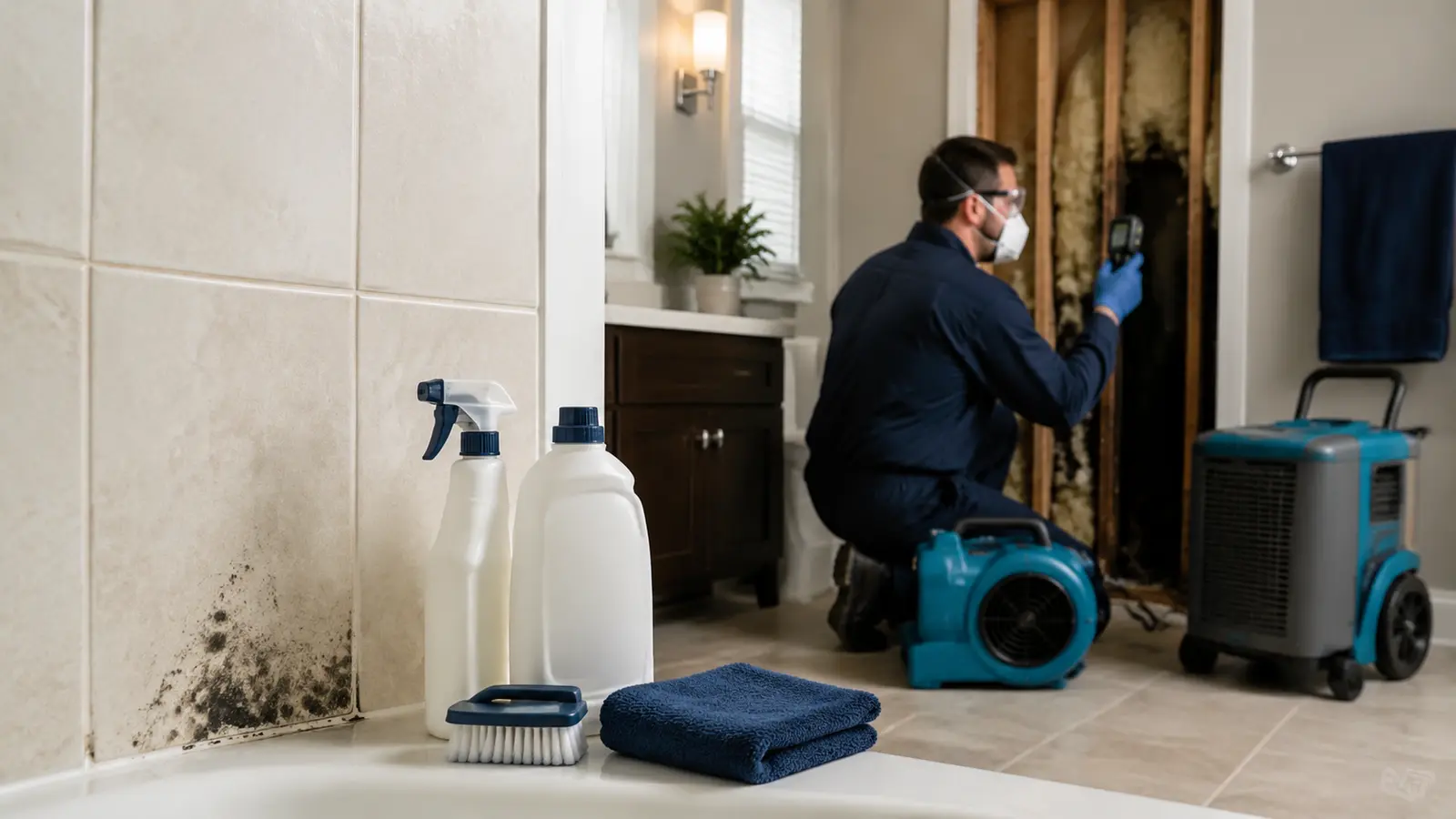
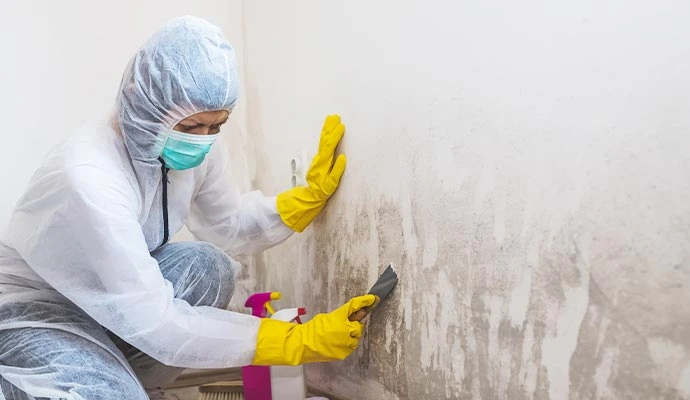
Not every mold problem needs a professional — but a meaningful number of DIY attempts we get called in to fix later made things worse, not better. Here's the EPA's own guidance on where that line actually sits, and why it exists.
The EPA's 10-Square-Foot Guideline
The EPA's published mold remediation guidance draws a reasonable line at roughly 10 square feet of affected area (about a 3-foot by 3-foot patch) as the upper limit for a homeowner to reasonably handle without professional help — assuming the person doing the cleanup has no underlying respiratory conditions or mold allergies, and the mold isn't the result of contaminated water (sewage backup, flood water).
When DIY Cleanup Is Reasonable
- Small, isolated surface mold on a non-porous material (tile, glass, hard plastic)
- Total affected area under roughly 10 square feet
- No known underlying moisture intrusion — a one-time condensation spot, for example
- No household members with asthma, mold allergies, or compromised immune systems
For these cases, the EPA recommends cleaning with detergent and water (not bleach, which the EPA notes doesn't penetrate porous surfaces well and can be its own respiratory irritant) and thoroughly drying the area afterward.
When to Call a Professional Instead
- Area larger than ~10 sq ft — beyond what basic containment (a closed door and a fan) can reasonably control.
- Porous materials — drywall, insulation, and wood framing that mold has penetrated below the surface generally can't be fully cleaned and need removal.
- Mold from contaminated water — sewage backup or flood water carries additional contamination risks beyond mold itself.
- HVAC system involvement — DIY cleaning risks spreading spores through the entire house via the ductwork.
- Anyone in the household is high-risk — infants, elderly residents, or anyone with asthma, mold allergies, or a compromised immune system.
- You don't know the moisture source — cleaning visible mold without identifying and fixing what's feeding it is close to guaranteed to have it return.
Common DIY Mistakes We See
- Painting over mold instead of removing it — this doesn't kill mold and can trap moisture, making the underlying problem worse.
- Using bleach on porous materials, which can bleach the visible surface color while mold continues growing beneath it.
- Cleaning without addressing the moisture source, leading to near-certain recurrence.
- No containment during cleanup, spreading spores to previously unaffected rooms.