
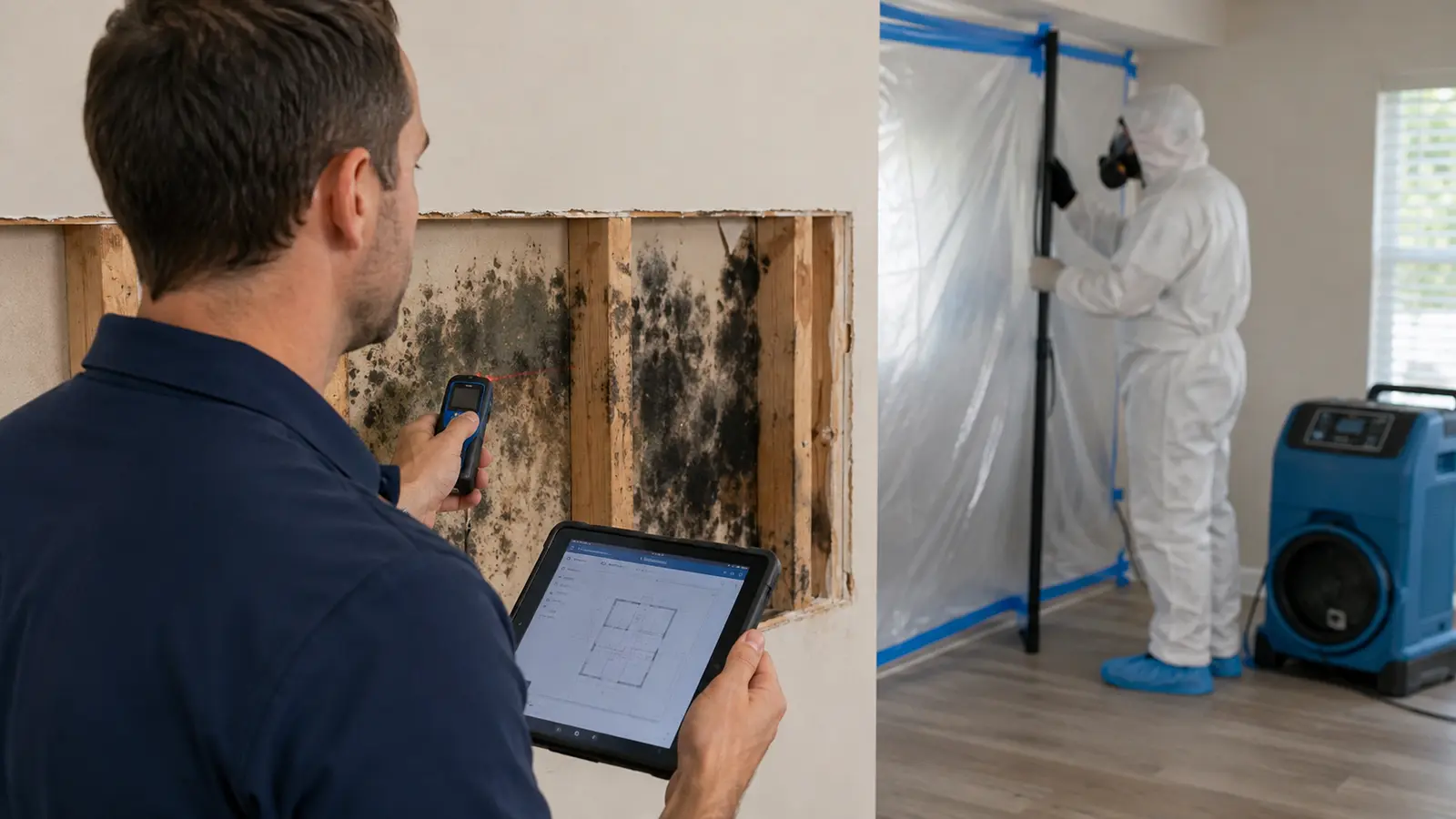
Black mold removal typically costs more than routine mold remediation — usually by a few hundred to a couple thousand dollars depending on scope — because of the extra containment, PPE, and testing most reputable companies build into the process. Here's exactly where that extra cost comes from, and how to tell if a quote is padding unnecessarily.
Why Black Mold Costs More to Remove
- Species confirmation testing — reputable companies test to confirm Stachybotrys (or another toxigenic species) before quoting, since not all dark-colored mold is actually "black mold" in the toxigenic sense.
- Higher containment standard — full poly containment with a decontamination chamber for technicians, rather than the lighter containment used for routine mold.
- Additional PPE — full-face respirators and disposable suits for technicians, versus basic PPE for standard jobs.
- Post-job clearance testing — independent air testing to confirm the area is actually clear before containment comes down, strongly recommended (and often included) for black mold specifically.
Typical Black Mold Removal Cost Ranges
| Scope | Typical Range |
|---|---|
| Small area (<10 sq ft), contained | $800 – $1,800 |
| Moderate area (10–50 sq ft) | $1,800 – $4,000 |
| Extensive (50+ sq ft or multiple rooms) | $4,000 – $10,000+ |
Why an Unusually Cheap Black Mold Quote Is a Red Flag
Because proper containment and testing genuinely add cost, a black mold quote that's priced the same as routine mold removal usually means one of those steps is being skipped — most often clearance testing, or full containment. That can mean spores spreading to unaffected areas during removal, or no verification that the job actually worked.
Can You Remove Black Mold Yourself?
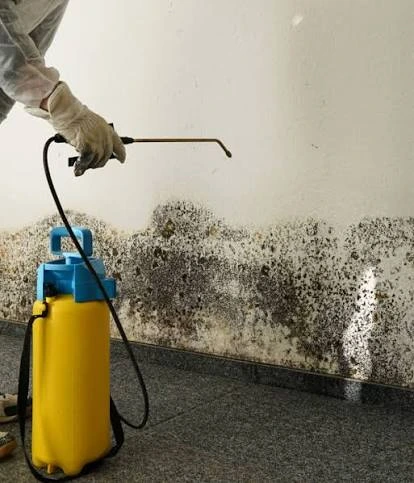
The EPA's guidance allows DIY cleanup for small areas (under roughly 10 square feet) using soap and water on non-porous surfaces, regardless of species. Beyond that size, or on porous materials like drywall and wood, professional remediation with proper containment is strongly recommended — both to protect your health during removal and to prevent inadvertently spreading spores to unaffected parts of the home. See our full DIY vs. professional guide.