
In This Article
"How long will this take" is almost always the second question after "how much will this cost" — and like cost, the honest answer is that it depends heavily on scope. Here's a realistic room-by-room timeline based on the jobs we actually do.
Typical Timelines by Job Type
| Job Type | Typical Duration |
|---|---|
| Small contained area (bathroom, closet) | 1 – 3 days |
| Single room, moderate spread | 2 – 4 days |
| Attic mold treatment | 1 – 3 days |
| Crawl space remediation only | 1 – 3 days |
| Full crawl space encapsulation | 2 – 5 days |
| Basement remediation + waterproofing | 3 – 7 days |
| HVAC duct cleaning & sanitizing | 1 day |
| Whole-house / multi-area remediation | 1 – 2+ weeks |
What Slows the Process Down
- Waiting on lab results before starting — if species ID matters for your job, factor in 2–5 business days before work even begins.
- Discovering mold has spread further than initially visible once demolition starts (a legitimate reason for a paused, re-scoped timeline — not the same as scope creep from a sloppy initial inspection).
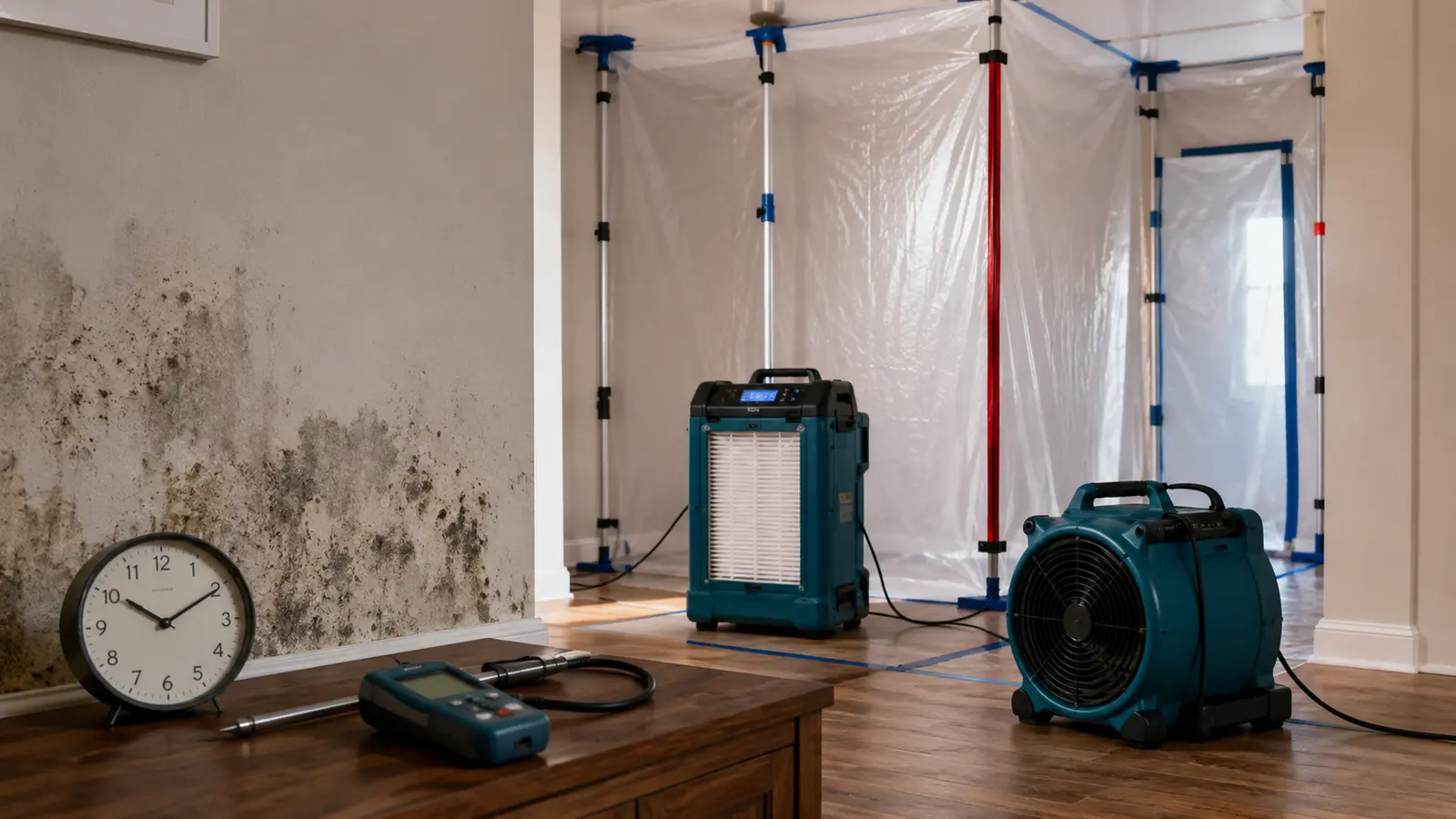
- Drying time. Materials need to reach target moisture levels before remediation is considered complete — rushing this step is how mold comes back.
- Coordinating a separate trade for the moisture-source repair (plumber, roofer) before or alongside remediation.
- Post-remediation clearance testing turnaround, if you've requested it — typically adds 2–5 business days at the end.
Can You Pay to Rush the Timeline?
Some steps (like lab turnaround) can be expedited for an added fee. Others — like proper drying time — genuinely shouldn't be rushed regardless of budget, because insufficient drying is one of the most common reasons remediation fails and mold returns within months.